
The What And Why Of A Discovery Process

Do you have a great idea for a website, web app, or mobile app but you’re unsure how to unpack your concept in a high level of detail, in order for it to evolve into a real-world product?
Don’t worry, you are not the first to experience this. The good news is that we are here to assist you!
The Discovery Process is the first phase of a development project, aimed at gathering information about your project. This tried and trusted process lets us work closely with you to scope out your project's requirements from a technical and usability perspective. During this phase, we provide you with expertise and guidance to gain clarity about what you need from your web application and how we can make it happen.
Together, during the Discovery Process, we will navigate the unknowns of your project and lay the foundation for development. The Discovery Process allows us and you to make informed decisions about your project.
The Discovery Process is the first phase of a development project, aimed at gathering information about your project. This tried and trusted process lets us work closely with you to scope out your project's requirements from a technical and usability perspective. During this phase, we provide you with expertise and guidance to gain clarity about what you need from your web application and how we can make it happen.
Together, during the Discovery Process, we will navigate the unknowns of your project and lay the foundation for development. The Discovery Process allows us and you to make informed decisions about your project.
WHAT IS THE DISCOVERY PROCESS?
The Discovery Process is the first step taken when starting the development of a new digital product.
In the Discovery Process, we work with you to define and understand the project's objectives, requirements, and scope. The goal of the Discovery Process is to gather information, analyse business needs, and create a plan for the project that will guide the rest of the process.
These activities are done through a series of workshops with you. We also discuss and plan for any potential technical challenges, such as third-party integrations, that may arise during the development phase.
The outcome of the Discovery Process is that the scope and priorities of the project are clearly defined and that all parties are on the same page with regards to what is required when the development starts.
HOW THE DISCOVERY PROCESS WORKS
There are various steps and processes involved in the Discovery Process, which we will take you through below.
The Discovery Process involves the following activities:
1. WORKSHOPS
We’ll host workshops with you to produce a project specification document.
This document serves as a blueprint for the project and provides a clear set of guidelines for the development team to follow. It details the project's scope, features, functionalities, technical requirements, timelines, and budget. It is used to ensure that everyone involved in the project has a clear understanding of the shared vision of what the final product should look like and how it should work.
Generally, there are 3-4 workshops, which take approximately an hour each, spread over the course of 2-3 weeks. These will be booked with you at a convenient time and held via Google Meets (or similar virtual meeting software).
These workshops entail our understanding of your project requirements and vision in great detail. We will guide you in terms of how certain things will work, and we will also help in prioritising certain features.
2. PROJECT SCOPING
Project scoping is the process in which we define the goals, requirements, features, and functionality of your development project. It involves identifying the scope of the project, determining the resources needed to complete it, and establishing a timeline and budget.
Once the project scope has been defined, we can create a detailed project plan. This plan provides a blueprint for the project and serves as a reference point throughout the development process.
Project scoping is a critical step in the web development process, as it sets the foundation for the project's success. By defining the project's scope upfront, we can ensure that all stakeholders involved in the project have a clear understanding of the project's goals and requirements and that the project stays on track throughout the development process.
3. WIREFRAMING
Once the scoping phase is finalised, we may also produce wireframes to accommodate the project specification document.
Not all projects require wireframes, this depends on the project and its complexities. For complex projects, we need to wireframe certain process flows and user journeys.
Wireframes are simple, two-dimensional layouts that illustrate the basic structure and content of a web page or application. They are essentially a blueprint of the website or application, providing a visual representation of the design and layout without the distraction of colour, typography, and other design elements.
Wireframes typically include simple boxes and shapes to represent different elements of the webpage, such as headings, text, images, buttons, and menus. They are often created in grayscale or with limited colour palettes to focus on the structure and layout of the page, rather than the visual design.
They serve as a visual guide for the development team, ensuring that everyone involved in the project has a clear understanding of the layout and structure of the webpage or application. They also help to identify any potential design or layout issues before the development process begins, saving time and resources in the long run.
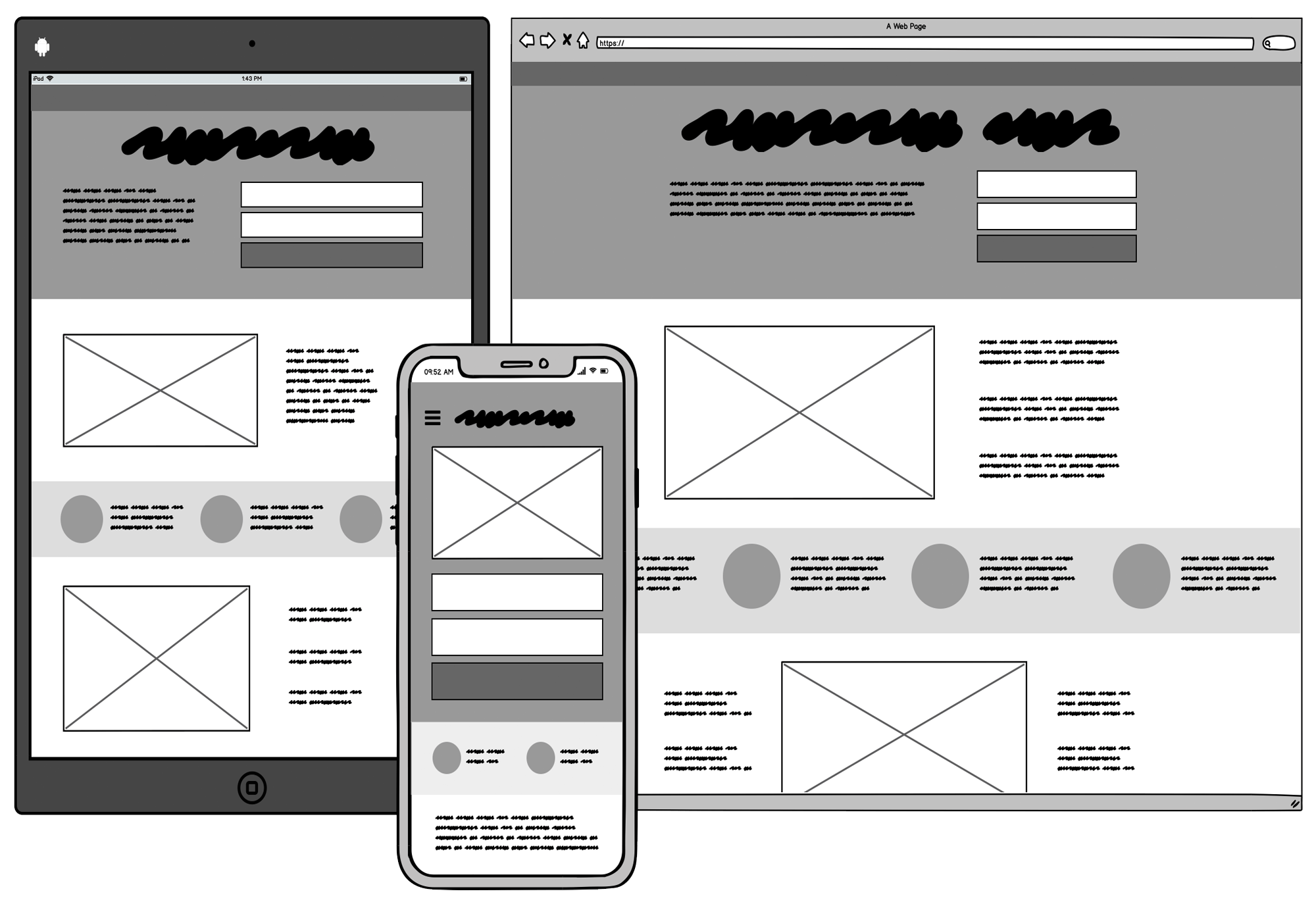
Wireframes can even be made interactive, so the user journey flow can be demonstrated, and the user can click to move around as if they were using the website or app similar to a prototype of the product.
Some projects can go into development without wireframes, and some definitely need wireframes to be created due to the complexity of the project.
The project lead, working with you on your project, will determine and advise if this is necessary before we go into development.
OUTCOME
After we have completed the Discovery Process with you, you will have a full project specification document and, if your project calls for it, wireframes.
Now that we've finalised the scope of the project and determined what needs to be developed in order to take your project to market, we will be able to provide you with an accompanying cost estimate and a project timing plan.
WHY WE NEED TO DO THE DISCOVERY PROCESS
As an expert in your field, you have recognised a gap in the market to develop a website, web app or mobile app. This digital product will solve a distinct problem and has the potential to be very profitable for you.
Designing and developing custom digital projects can be highly complex, with many moving parts and lots of technical elements to take into consideration. When you don't have the complete, clear project scope you need to build your bespoke web app, it can create uncertainty that can harm your project's success. This can lead to extra costs, missed deadlines, and an unclear plan for the whole project.
The Discovery Process helps us eliminate any uncertainty by setting a clear direction and defining what we need to achieve. This means we create a clear plan and timeline for the project, so everyone knows what to expect and when. By doing this, we can avoid unnecessary risks and make sure the project runs smoothly and successfully.
We do the Discovery Process with you to ensure that the scope is clear and that we are all aligned on what the project's requirements and priorities are.

BENEFITS OF THE DISCOVERY PROCESS
1. DEFINE A CLEAR PROJECT SCOPE
A major benefit of the process is that we will work closely with you to scope out your project in detail to define a clear project scope and eliminate any unknowns that may arise during the development.
We put a lot of emphasis on clarifying which features and functionalities are necessary to your project as an MVP or minimum viable product. This includes third-party integrations like payment gateways, automated processes, and which types of users will be interacting with your web app.
2. CREATE A GREAT USER EXPERIENCE
You want your website to be optimally user-friendly. During the Discovery Process, we can design UX process flows that are engaging and built for the best user experience we can create for your platform.
3. DESIGN PROTOTYPES WITH POTENTIAL
From the project specification document, wireframing can be a valuable addition to validate the usability, design, and functionality of the product.
The wireframe of your project allows you to get a sneak peek into what you can expect from your final web application.
Wireframes can be seen as a simplified version of the final product. It eliminates any back-and-forth before the design and development stages.
4. FIRM UP THE COSTS
You want to know exactly what your project is going to cost, and this is exactly what the Discovery Process allows us to do once the scope has been clearly defined.
During the Discovery Process, we will define all aspects and details of your project upfront. By thoroughly working through the Discovery Process with you, you will have an accurate quote and a clear understanding of what we will achieve with your project.
5. FINALISE PROJECT TIMELINES
The Discovery Process enables us to calculate and finalise clear and concise project timelines. We are also able to determine milestones within the project so that you know when things can be expected to be delivered.
WHO IS INVOLVED
1. YOU - THE CLIENT
You are the most important part of your project!
Your involvement is crucial to the success of this project. You will participate in all workshops and have final approval over all decisions and deliverables created by the Elemental team.
2. PROJECT LEAD
Your project lead will take care of all communication aspects of your project.
They will arrange and facilitate the workshops with you, and they are responsible for scoping out the project in order to produce the specification document during the Discovery Process.
3. UX/UI DESIGNER
The UX/UI Designer is responsible for creating the wireframes that showcase what your product will look like, and how some interactive features will function.
Your project lead will collaborate with the designer and provide any feedback directly to you, as well as present the wireframes for your project to you.
YOUR INVESTMENT
TIME
The Discovery Process commonly ranges between 40-60 hours. The project's complexity will determine how many hours will be required for each specific project we work on and will be advised to you upfront before any work begins.
Most of the Discovery Process time would be spent in-house among our team, with research, writing the scope, and creating the wireframes. However, as mentioned above, we would require some of your time too. Meetings with you are important, and your input will be required.
Typically, we estimate that medium-sized projects require 1-3 weeks in the Discovery Process, while large projects can take between 4-5 weeks.
POST-DISCOVERY PROCESS
So, you're wondering what happens when the Discovery Process is complete?
Let’s dive into what you can expect from the next phases of your project.
1. DESIGN PHASE
Desktop and mobile designs will be created for your new website or app based on the wireframes created in the Discovery Process.
2. DEVELOPMENT PHASE
The development phase is where we develop the actual product that we’ve scoped out. The development entails both front-end and back-end development.

3. QA PHASE
During this phase, our QA (quality assurance) team will stress test the system to ensure that the product works as specified and that visually, it works robustly across all devices.
4. CLIENT HANDOVER
You will have access to our project management tool, ClickUp, which we will set up for your project. This allows you to add any feedback points that require attention and monitor the status of tasks.
5. DEMO PHASE
Once your project has been internally tested for quality assurance and signed off accordingly, your project manager will present and demonstrate your bespoke web application to you, going through all user journeys and explaining how all the features work.
6. GO LIVE
Once the feedback has been signed off and the site is ready to be deployed, we are ready to go live!
LET'S FINISH UP HERE
The Discovery Process is the vital first step in transforming your digital idea into reality. Through workshops and meticulous planning, it establishes a clear project scope, ensuring streamlined development. This phase, involving project scoping and wireframing, not only eliminates uncertainties but also enhances the user experience and validates prototypes.
Your investment in time and cost here is crucial for the project's success, guiding subsequent stages seamlessly, from Design and Development to QA and Going Live. In essence, the Discovery Process is the foundation propelling your idea from concept to a successful digital web app.
We are excited to take you on this development journey with us. You can rest assured that you will be guided and supported throughout this process of turning your great idea into a world-class digital product.
Don't hesitate to contact us if you’re ready to get started on your web development journey with Elemental!