-
Type
Software application
-
Sectors
Advertising, media
-
Technologies
Javascript, PHP, CodeIgniter, MySQL
From one shared
spreadsheet to a
self-service
portal powering
screens
nationwide
Our client runs an Out Of Home (OOH) media network, the advertising and content you see on screens outside your own home, in a gym, a shopping centre, or a spa reception. They manage a growing digital screen network across sites in the UK, working directly with brands to get their content live, correctly and on time, everywhere it needs to appear.
It's a more delicate job than it sounds. Brand assets arrive in every shape, size and format imaginable, and each one has to be checked, resized and made to animate properly for the specific screens it will run on. Behind that content sits an operational challenge most people never see: the request system that lets brands and site managers actually get that content onto the network in the first place.
That system was built and maintained by an outside developer, and while the client technically had access, every fix and every change was still dependent on that developer's lead times. Small requests could sit in a queue for days. Bugs went unresolved for longer than they should have, and the relationship with that developer wasn't heading in a good direction.
To keep things moving, the team found workarounds, long email threads chasing updates that inevitably got lost, details repeated across multiple messages, requests falling through the cracks. For a small team managing a large and growing network, it was eating time and creating effort that had nothing to do with the actual job of running the business.
Every change, whether a new field, a character limit, or a wording fix, still meant logging a request and waiting. Given how particular the content requirements are, even small adjustments could mean the difference between a brand's assets going live smoothly or arriving broken and wrong.
The turn: we handed them a platform they own and control outright, with no more waiting on someone else's queue and no more chasing lost threads to get something fixed. It became the first project in what's grown into a long-standing partnership.
Every client gets their own portal. We only built one.
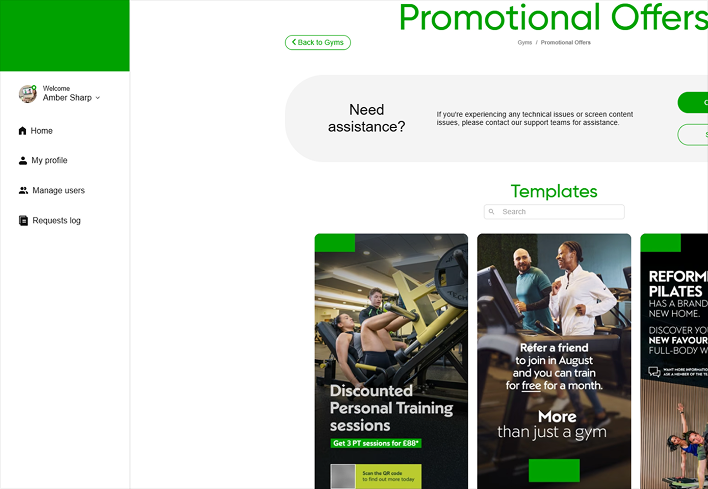
At the centre of the solution is a single admin console that generates a fully branded, self-contained portal for each of the client's own customers, whether that's a gym chain, a shopping centre operator, or a spa group. Rather than maintaining a separate codebase per client, one platform now powers all of them, each with its own logo, colours, and welcome message baked in.
That platform is structured so each client's teams only ever see what's relevant to their part of the business: their own sites, departments, and content categories. Nothing bleeds across accounts, and nothing needs to be manually filtered or hidden.
Access is fully role-based. Most users only interact with their own slice of the system, but site-manager "super-admins" get a wider view, able to oversee their entire site and keep tabs on everything happening across their locations.
Categories, forms and all dynamic content sit fully in the client's hands, not just at launch, but on an ongoing basis. As an existing client's needs evolve, whether that's a new department, a new content type, or a new field on a form, the client's own team makes that change themselves, with no need to come back to us. On top of that sits a managed library of content templates that they organise and maintain in the same way, reflecting the exact formats and specifications their screen network requires.
The platform also connects directly into the Google Sheets the client already relies on to manage production, so the data flowing out of the portal feeds straight into the same spreadsheets powering their day-to-day operations, without them needing our help to set that connection up. The result is a genuinely multi-tenant system: one platform, built once, that scales cleanly across every gym, mall and spa the business brings onto its network, and keeps scaling as each one grows.
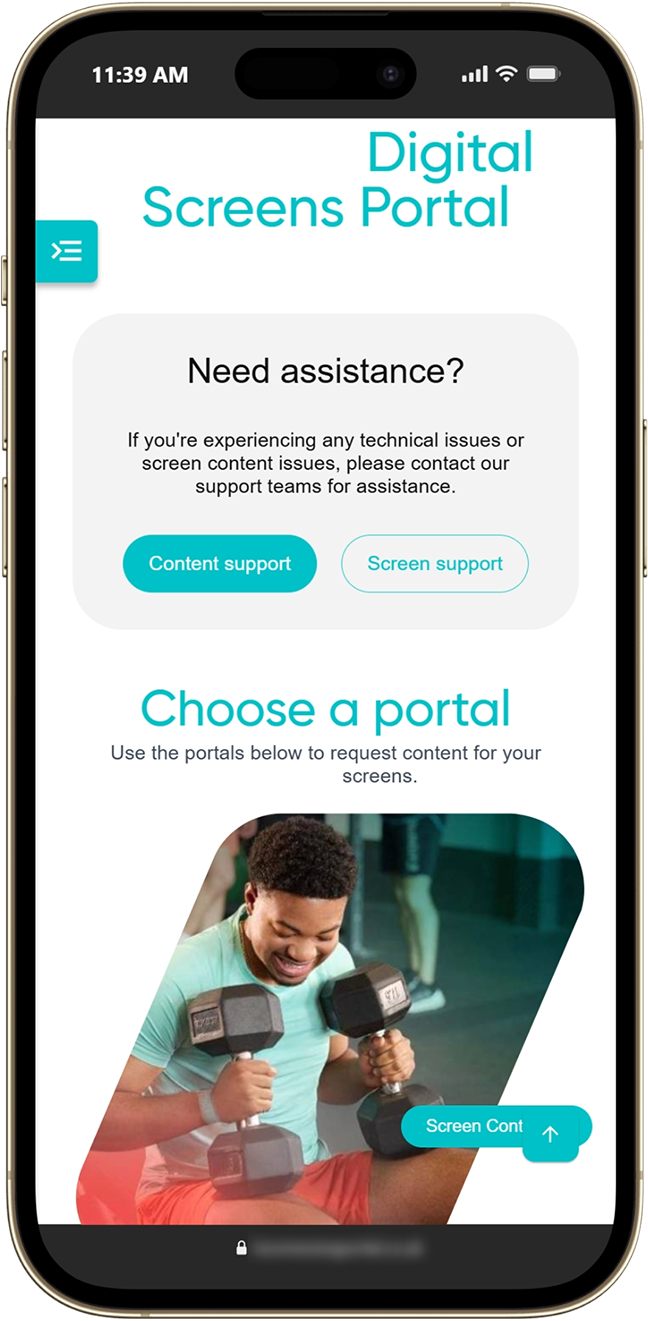
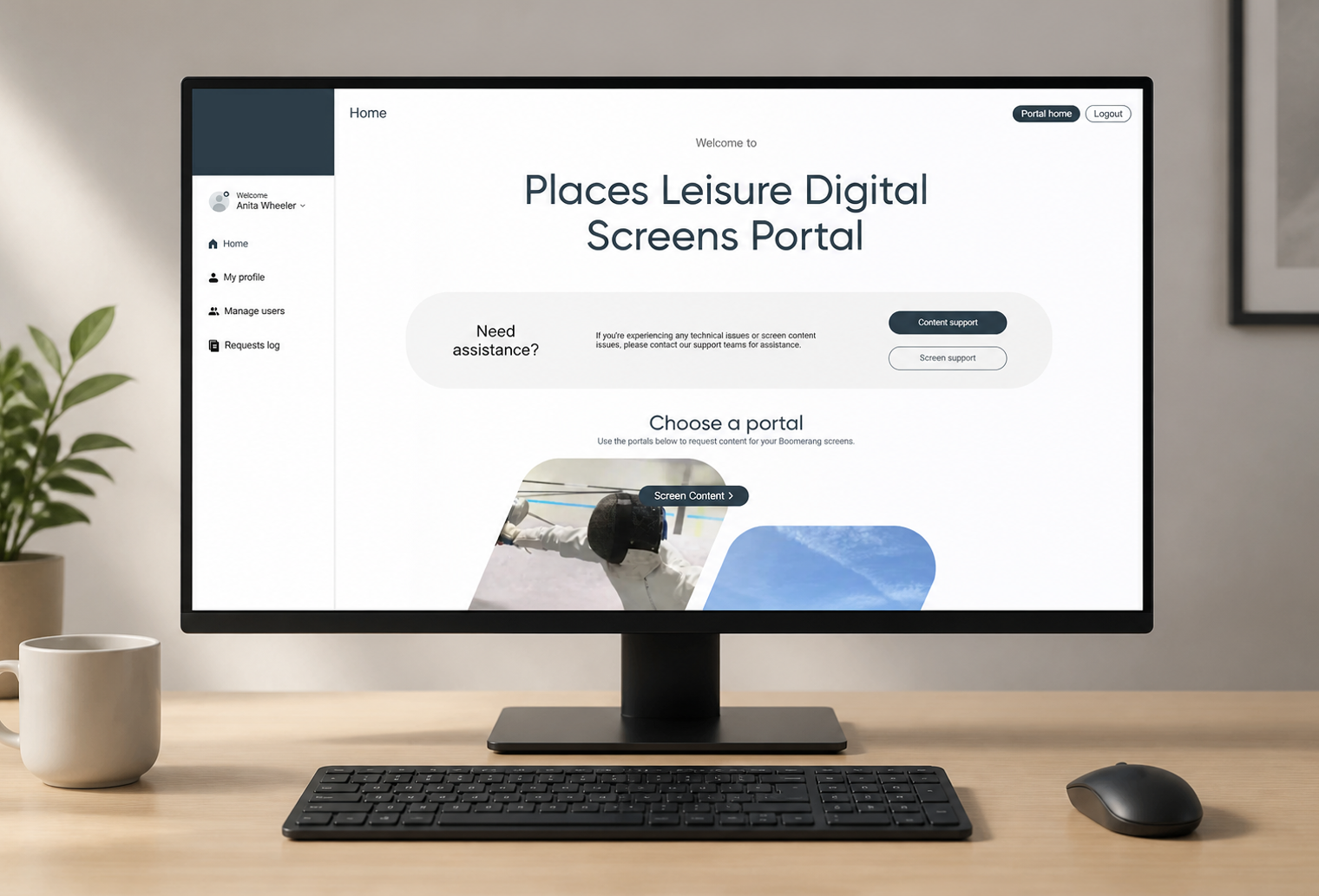
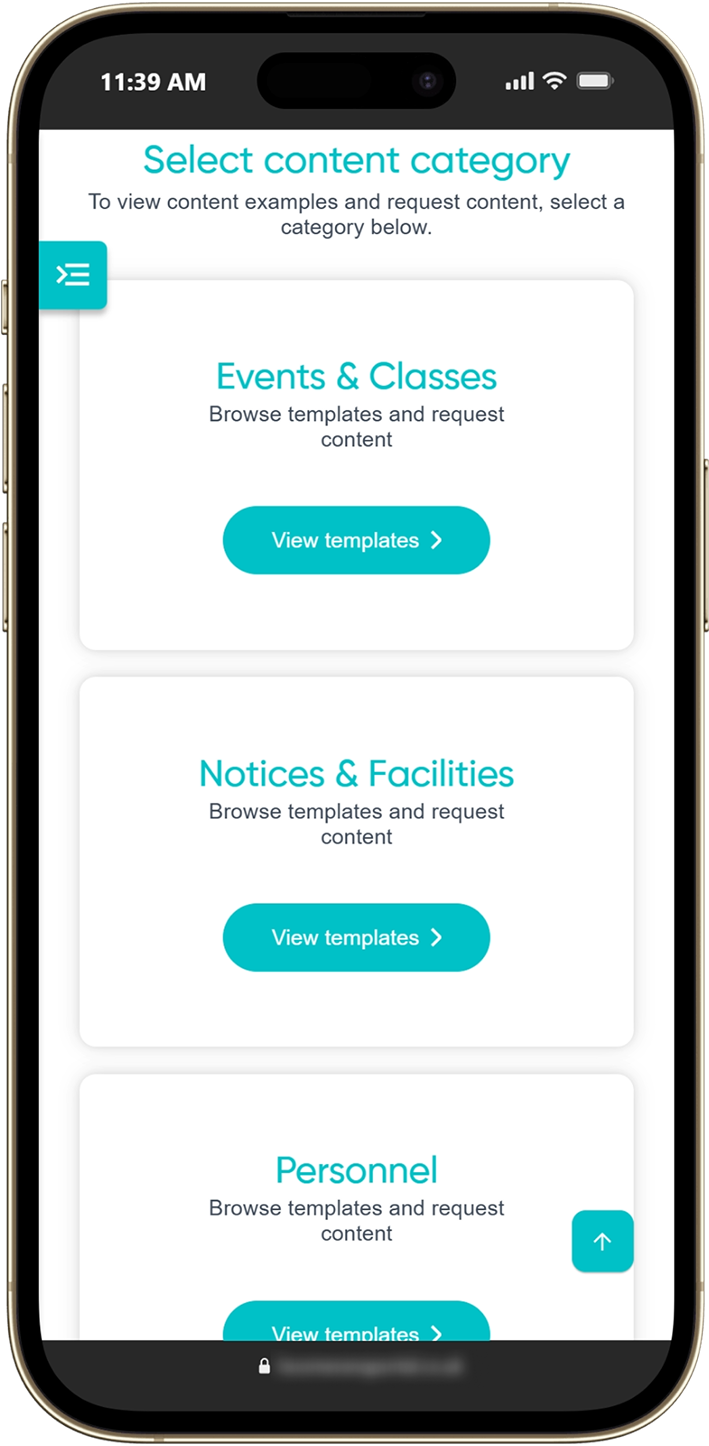
No more wondering if anyone's even seen your request.
For the brands and site teams actually submitting requests, the experience changed completely. Every user now gets a clear, personal history of everything they've submitted and exactly where each request stands, from received through to live on screen, without ever needing to chase anyone for an update.
There's one place to raise anything: new content, a change to something existing, or a removal, replacing what used to be a scattered mess of emails and informal requests that were easy to lose track of, especially when a brand's assets needed revisions before they'd meet screen specifications.
Self-service account management means users can manage their own details without needing an administrator to step in for routine changes, and the right people are automatically notified when something important happens, whether that's a request being actioned, a proof being ready to review, or content going live.
This replaces a system where end users were so unsure of the process, and so unclear on whether anything they submitted would actually make it onto a screen, that many avoided using it altogether and found workarounds instead. Giving people visibility and confidence in the process turned out to be just as important as the technical functionality behind it.
Onboarding used to be a project. Now it's an afternoon.
Before the bespoke platform rebuild, every portal was a separate build. Onboarding a new client, whether a gym chain or a shopping centre group, meant briefing a developer from scratch, waiting on a quote, waiting on a build, and then waiting again for every change that followed.
There was no login system and no audit trail, so anyone could access a portal and submit requests with no way to verify who they were. Tracking those requests happened offline, if it happened at all, which made disputes over what was submitted, when, and by whom almost impossible to resolve.
Now, the client can spin up a new branded portal for any company they bring onto their network entirely on their own. They build the pages, write the content, set up the forms to match their exact specification requirements, and organise the categories and departments for that new client, all without a developer touching a single line of code. Every request across every client and every site is logged automatically and trackable from the moment it's submitted.
In practical terms, they've been handed the keys to the kingdom. What used to require a developer, a brief, and a wait, now takes their own team a matter of hours. That means they can grow their network across the UK as far as their sales pipeline allows, with the platform having no ceiling of its own, and only need to bring us back in for something genuinely new, like adding an additional language or building out a piece of functionality that doesn't exist yet.
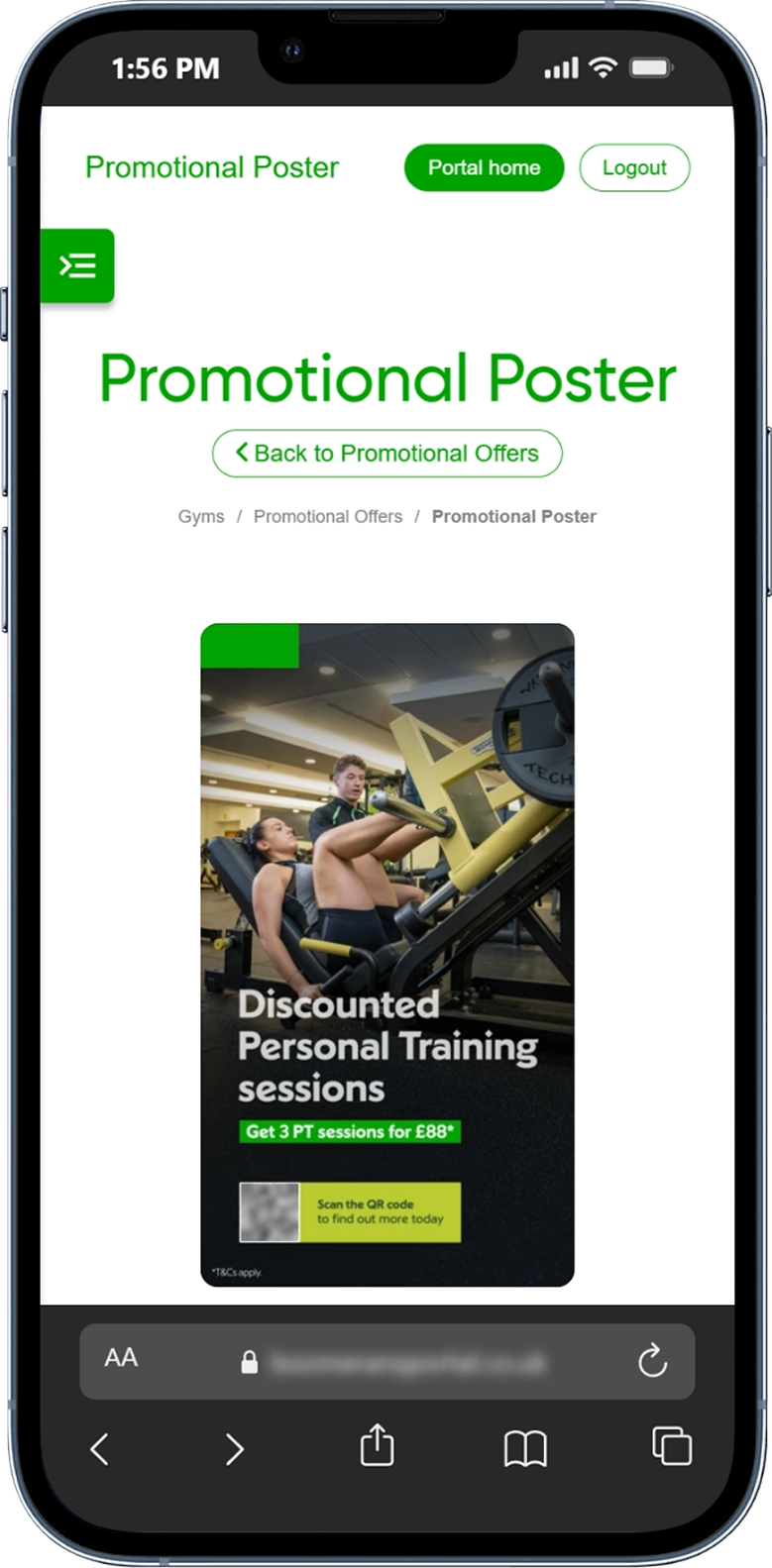
Do you need the services of a solid web development agency?
We help businesses of all shapes and sizes, from startups to highly established companies, with custom web development and design. We'd love to hear about your idea and become your tech partner to turn your vision into reality.
INTERESTING FACTS
It all ran on one spreadsheet. Before the portal existed, an entire network of digital screens across multiple gym, mall and spa sites was coordinated through a single shared Google Sheet and scattered portals with no secure logins.
The system fixes its own mistakes. If a submission ever fails to reach the back office, the platform quietly retries on its own and only involves a person if it still can't get through after several attempts.
Video proofs arrive by themselves. When a finished content proof is ready, the portal fetches the preview and drops it straight into the client's history. No chasing, no manual links.
Admins can "become" any user. A built-in Login As tool lets the client's team step into any account to help someone or submit on their behalf, turning a support back-and-forth into a couple of clicks.
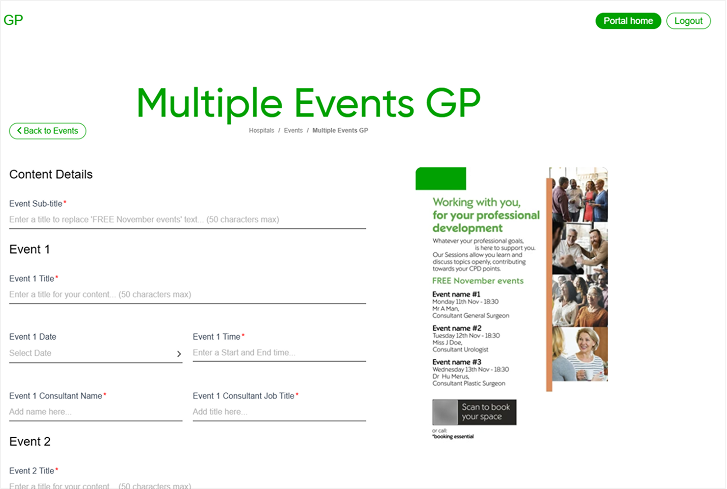
Every screen has its own rules. Screens across the network come in different sizes and orientations, so submitted content is checked against the exact specification of the screen it's destined for, catching sizing or format issues before they ever reach a shopfloor or gym wall.
CHALLENGES
Killing the amendment guessing game. Before, changes were tracked by best guess, matching, say, a trainer's name and club to find the original submission. Change that name and the trail vanished, so people gave up and emailed instead. We solved it by making every amendment open the user's actual original submission, pre-filled, so they tick only what changes. Every request is now tied to a real record.
Putting a no-code form builder in their hands. Before, every form tweak meant a ticket to an outside developer and a wait. We solved it by building a tool that lets the client create and edit their own forms in multiple languages, with conditional display controls: new fields, new rules, new validation, in minutes, with no code. This was the "keys to the kingdom" moment that really landed with them.
Locking down a wide-open door. Before, anyone could submit anything for any site, any number of times, with no way to verify who they were. We solved it with real accounts, verified users, and strict client-by-client isolation, so no one can see or submit against another client's world.
Related Projects


Toyota
